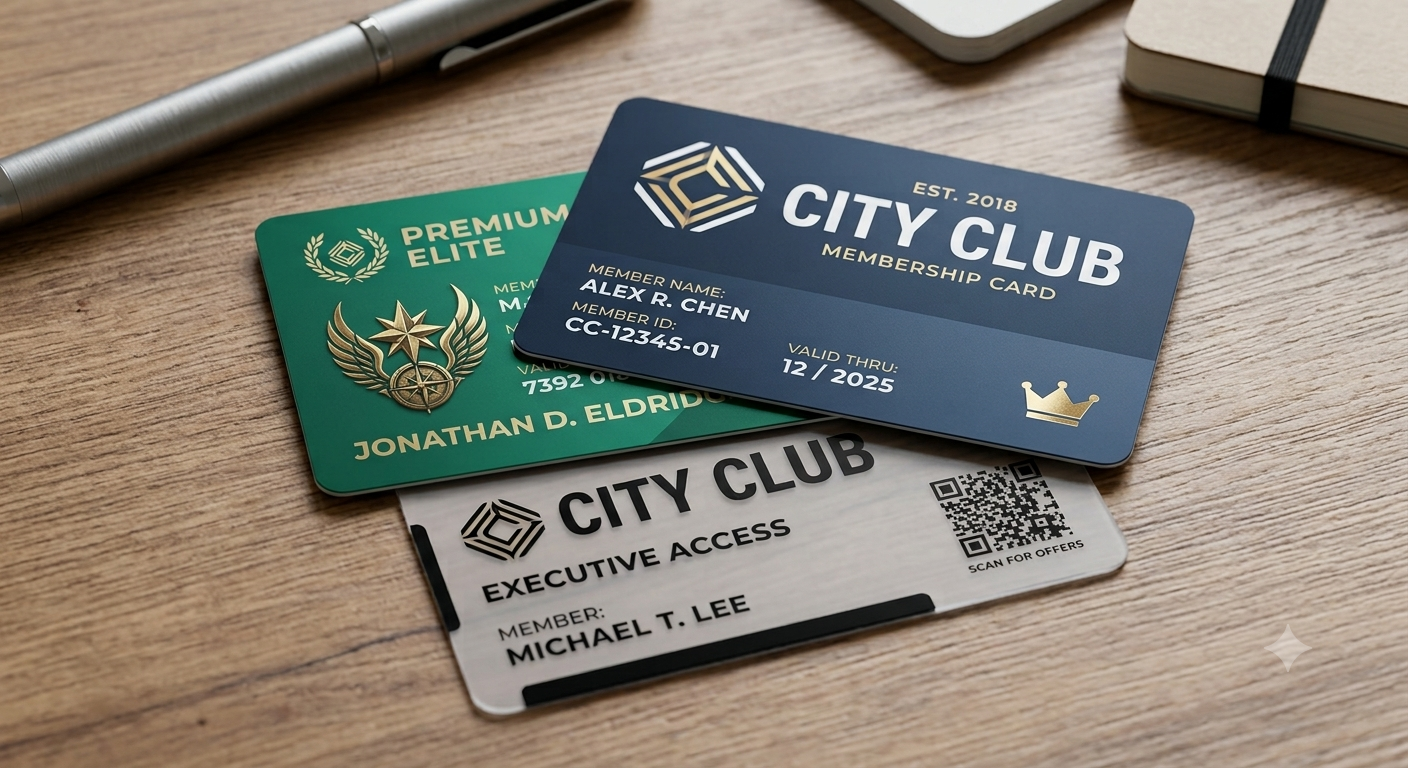
Hotels, restaurants, gyms, and clubs all have the same problem: how do you give members fast, secure access without hiring staff to check every entry? RFID membership cards solve this. A single tap — no swiping, no PIN, no paperwork.
This guide covers how RFID membership cards work, what types suit each organization, and how to set them up for hotels, gyms, restaurants, and clubs.
Why RFID Membership Cards?
RFID (Radio Frequency Identification) cards contain a small chip and antenna that communicate wirelessly with a reader. When a member taps the card near the reader, it's instantly recognized — no physical contact, no wear on the card, no delay at the door.
Compare this to:
Magnetic stripe cards — must be swiped, wear out over time
Barcode cards — must be scanned, can be smudged or scratched
Manual check-in — slow, requires staff, prone to error
RFID solves all three problems. It's why hotels, gyms, and clubs worldwide are switching to RFID membership cards.
How RFID Membership Cards Work
An RFID membership card has three components:
The chip — stores the member's unique ID number
The antenna — receives power from the reader and transmits the ID
The card body — usually PVC plastic, with the chip embedded
When a member holds the card near a reader:
The reader emits a radio signal
The card's antenna harvests power from the signal
The chip transmits the member ID back to the reader
The reader sends the ID to your system, which grants or denies access
The whole process takes under 0.3 seconds.
Frequency Types — Which One Do You Need?
RFID cards operate at different frequencies. Each has different range, speed, and cost trade-offs. Our TK4100 RFID guide covers this in depth.
| Frequency | Read Range | Best For | Cost |
|---|---|---|---|
| LF (125 kHz) | 1–10 cm | Hotel room keys, gym lockers | Low |
| HF (13.56 MHz) | 1–10 cm | Access control, gym entry, payments | Medium |
| UHF (860–960 MHz) | 1–12 meters | Inventory, parking, event check-in | Medium-High |
For membership cards, HF (13.56 MHz) is the industry standard. It offers:
Reliable short-range read
Fast communication
Compatibility with most access control systems
Support for secure protocols (MIFARE, NFC)
For hotel room keys, LF (125 kHz) cards are still common — cheap and reliable for short-range reads.
Types of RFID Membership Cards by Organization
Hotels
Hotels use RFID cards for:
Room access (replaces physical keys)
Gym and pool access
Restaurant and bar charges
Loyalty program tracking
Conference room access
Best card type: HF RFID with a printed hotel logo and room number. Often combined with a magnetic stripe for legacy door locks.
Restaurants
Restaurants use RFID membership cards for:
Loyalty programs (tap to earn points)
Table-side ordering
VIP member discounts
Reserved seating access
Delivery verification
Best card type: HF RFID with branded design. Often combined with a QR code for app integration.
Gyms and Fitness Centers
Gyms use RFID membership cards for:
24/7 entry (unmanned access)
Class booking verification
Locker access
Equipment access (some machines)
Payment for personal training
Best card type: HF RFID with photo. Durable PVC or composite material to withstand daily use and sweat. See our employee ID cards guide for similar durability considerations.
Clubs and Associations
Clubs use RFID membership cards for:
Member-only area access
Event check-in
Bar and restaurant charges
Guest pass management
Loyalty tier tracking
Best card type: HF or LF RFID with premium finish (metallic, holographic). Photo and membership tier clearly displayed.
Coworking Spaces and Offices
Coworking spaces use RFID cards for:
24/7 building access
Meeting room booking
Printing and equipment access
Member billing
Best card type: HF RFID, often combined with NFC for phone-based entry.
Materials & Durability
RFID cards are made from various materials depending on the environment.
| Material | Durability | Best For |
|---|---|---|
| PVC | 3–5 years | Standard memberships |
| PET | 4–6 years | High-use gyms, clubs |
| Composite (PVC/PET) | 5–7 years | Premium memberships |
| Polycarbonate | 7–10 years | High-security, hotels |
Gyms and fitness centers should use PET or composite cards — they resist sweat, heat, and daily wear.
Hotels typically use PVC — cards are replaced often and rarely last more than a few years.
Premium clubs benefit from composite cards with metallic finishes.
Design Best Practices for RFID Cards
RFID cards need special design considerations.
1. Don't print over the chip.
The RFID chip and antenna are embedded inside the card. Printing directly over them can interfere with the signal.
2. Leave space around the chip location.
Most card suppliers will tell you where the chip sits. Keep logos and photos clear of that area.
3. Use light backgrounds near the chip.
Dark ink absorbs radio signals slightly. For best performance, use lighter colors near the chip.
4. Include member photo and name.
Even with RFID, visual verification matters for security. Always print the member's photo and name.
5. Add a QR code for backup.
If the RFID chip fails, a QR code gives you a secondary method of verification.
6. Design for the reader.
Test your design with the actual readers you'll use. Some readers are more sensitive to design than others.
Security Features for RFID Cards
RFID cards can include several security features:
Encrypted chip — MIFARE DESFire, iCLASS, or similar
Unique serial number — one per card, trackable
Hologram — visual anti-counterfeit protection
UV ink — invisible under normal light
Photo ID — for visual verification
PIN or secondary authentication — for high-security areas
For most hotels and gyms, an encrypted HF chip plus a printed photo is sufficient.
Setting Up an RFID System
Here's what you need to get started:
1. Cards
Order RFID cards from a supplier who can encode them with your unique IDs.
2. Readers
Buy RFID readers compatible with your card frequency. Common brands: HID, Honeywell, Identiv.
3. Software
Access control software that manages member records, grants access, and logs entries.
4. Integration
Connect readers to your door locks, gym equipment, POS system, or building management system.
5. Encoding
Each card must be encoded with the member's unique ID. Most suppliers can do this during printing.
6. Testing
Test every card before issuing. Verify it works with all readers.
Pros and Cons of RFID Membership Cards
Pros:
Fast, contactless access (under 0.3 seconds)
Durable — no magnetic stripe to wear out
Works through wallets, phone cases, and clothing
Supports multiple applications (room access + payment + loyalty)
Difficult to counterfeit with encrypted chips
Ideal for 24/7 unmanned facilities
Cons:
Higher upfront cost than barcode or magnetic stripe cards
Requires RFID readers and compatible software
Metal surfaces and liquids can interfere with signals
Lost cards need deactivation and replacement
For most modern gyms, hotels, and clubs, the benefits outweigh the cost.
Real-World Use Cases
A 24/7 gym — Members tap in with RFID cards, no front desk needed. Software tracks attendance, class bookings, and locker use.
A boutique hotel — Guests receive RFID cards at check-in. Same card opens the room, gym, pool, and charges meals to the room.
A private club — Members tap in at the door. RFID tracks bar charges, event attendance, and tier upgrades.
A coworking space — Members tap in 24/7. The same card books meeting rooms, prints documents, and logs hours.
Where to Get RFID Membership Cards
At Identity Cards, we supply custom RFID membership cards for hotels, gyms, clubs, restaurants, and coworking spaces across India. We handle design, printing, chip encoding, and bulk delivery.
Whether you need 100 cards or 10,000, we can help you set up a complete RFID access system. Browse our full range of membership card solutions or get a bulk quote.
Final Thoughts
RFID membership cards are no longer a luxury — they're the standard for any organization that wants fast, secure, contactless access. From 24/7 gyms to boutique hotels, the technology pays for itself in reduced staffing and improved member experience.
The three things to focus on: durable material, encrypted chip, and clean design that doesn't interfere with the antenna.
Ready to issue RFID membership cards for your organization?